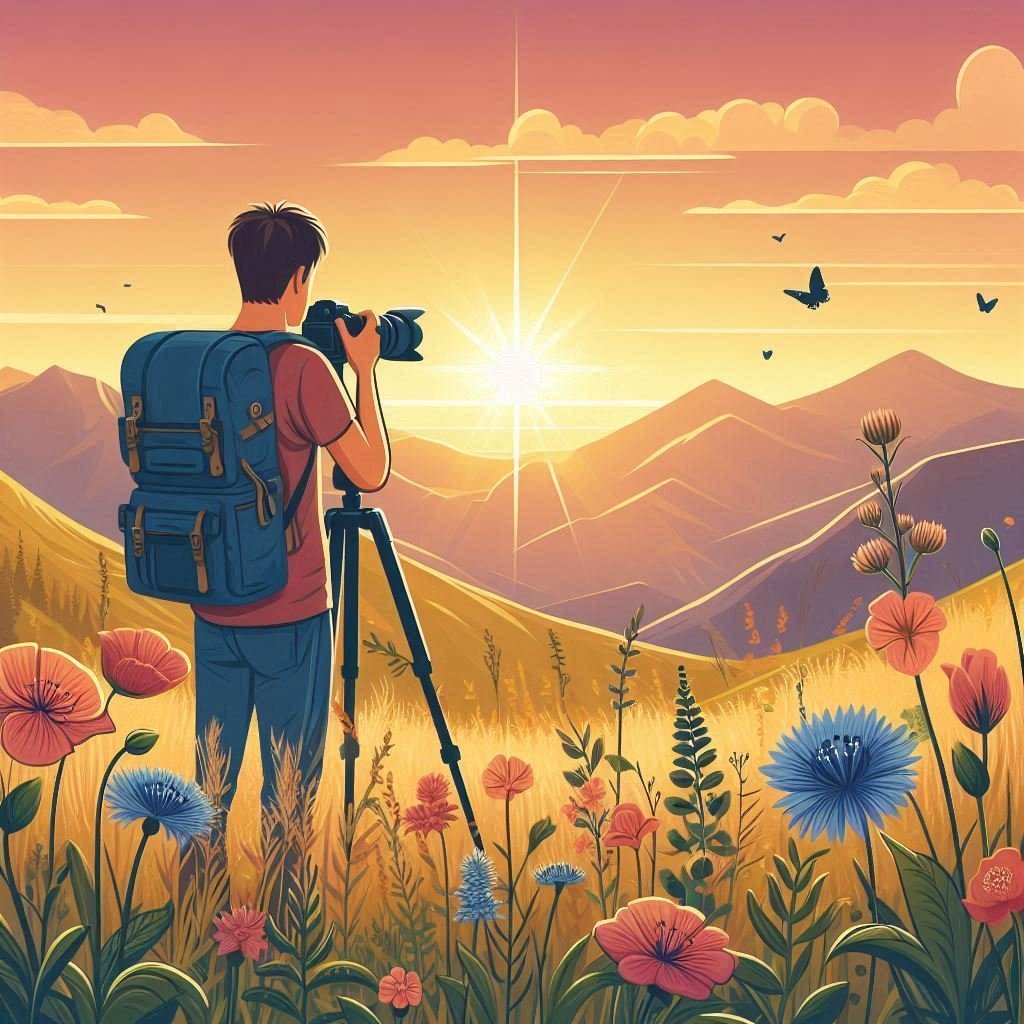
Nature Won’t Wait: The Landscape Photographer’s Survival Guide
Let’s start at the beginning, because even if you’ve been shooting landscapes for years, it’s worth a quick refresher before we dive into the beautiful, muddy, sunburn-inducing chaos of it all.
Landscape photography is the art of capturing the natural world: sweeping vistas, dramatic skies, tranquil forests, rugged coastlines, and everything in between. Unlike portrait or product photography, your subject isn’t going to take direction. You can’t ask a mountain to “turn a little to the left.” Nature runs the show, and your job is to show up, be ready, and try not to trip over your own tripod.
It’s one of the most rewarding genres in photography, and also one of the most humbling. Nothing will put your ego in check faster than hauling yourself out of bed at 4 a.m. only to discover the sky is a flat, featureless gray. Welcome to the club.
Types of Landscape Photography
Landscape photography is a broad world. Here are the main flavors you’ll encounter:
Wilderness & Natural Landscapes — The classic. Mountains, valleys, forests, deserts. This is what most people picture when they hear “landscape photography.” Big, dramatic, and often requiring a serious hike.
Coastal & Seascape Photography — Waves, tide pools, sea stacks, and the occasional rogue splash that soaks your camera bag. Coastal shooting is breathtaking and absolutely brutal on your gear.
Astrophotography & Night Landscapes — Stars, the Milky Way, the moon, all while standing in a dark field at midnight, alone, questioning your life choices. Absolutely stunning results.
Golden Hour & Sunrise/Sunset Photography — The bread and butter of landscape shooters. That magical warm light at dawn and dusk that makes literally everything look incredible. The catch? You have to be there for it.
Urban & Environmental Landscapes — Cities, industrial zones, farmland, man-made environments treated with the same compositional care as natural ones. More accessible and underrated as a genre.
Aerial Landscape Photography — Drones have opened up a whole new world here. Epic bird’s-eye views that were once reserved for helicopter pilots and very lucky birds.
The Best Gear for Landscape Photography
You don’t need to spend your entire life savings to shoot great landscapes, but having the right tools absolutely helps. Here’s what most landscape photographers rely on:
Camera Body — A DSLR or mirrorless camera with good dynamic range is your best friend here. Full-frame sensors handle shadows and highlights beautifully, but a modern crop-sensor camera is more than capable.
Wide-Angle Lens — The workhorse of landscape photography. A 16–35mm range lets you capture expansive scenes and dramatic foregrounds. Pro tip: a sharp, well-stopped-down wide-angle is worth far more than a mediocre one wide open.
Sturdy Tripod — Non-negotiable. If you’re shooting at golden hour, long exposures, or anywhere with low light, a shaky tripod will ruin your shots faster than anything else. Invest here. Your knees will thank you too, no more trying to hold still.
Filters — Polarizing filters cut glare and boost color saturation. Neutral density (ND) filters let you use long exposures in bright light for that silky waterfall effect. Graduated ND filters help balance bright skies with darker foregrounds. These are genuinely game-changing.
Remote Shutter Release — Because even pressing the shutter button can introduce camera shake on long exposures. Yes, really. A $20 remote can make a meaningful difference.
Weather-Sealed Gear — Landscapes don’t happen in climate-controlled studios. Rain, dust, sea spray, and cold temperatures are all part of the deal. Weather sealing on your body and lenses is worth every penny.
The Top 6 Challenges of Shooting Landscape Photography
Alright, here’s the meat of it. If you’re new to landscapes, consider this your orientation. If you’re a seasoned shooter, prepare to nod vigorously.
1. Weather That Does Whatever It Wants
You planned meticulously. You checked three different weather apps. You drove four hours to the perfect overlook. And then: clouds. Thick, gray, uninteresting clouds. Or worse, a totally clear, cloudless sky, which sounds nice but is actually terrible for photography (flat light, harsh midday sun, zero drama).
The solution? Embrace the uncertainty. Some of the most iconic landscape photos came from “bad” weather, stormy skies, incoming fog, dramatic light breaking through clouds after rain. Flexibility is your greatest asset. Check forecasts obsessively, but always be ready to adapt.
2. The Tyranny of Light
Light in landscape photography isn’t just important, it’s everything. The difference between a mediocre shot and a jaw-dropping one is often just timing. Golden hour (the hour after sunrise and before sunset) delivers that warm, soft, directional light that makes landscapes sing. Blue hour, just before sunrise and after sunset, adds a cool, moody magic.
Midday sunlight? Harsh, flat, and unflattering. Rookie trap. Master your light windows and plan every shoot around them. That means early mornings. Lots of early mornings. Your coffee maker is now your most important photography accessory.
3. Nailing Composition in the Wild
In a studio, you can arrange everything. In nature, you get what you get. Finding a compelling composition in a chaotic, uncontrollable environment is genuinely hard. Foreground interest, leading lines, the rule of thirds, negative space, all the compositional tools you know still apply, but now you’re working with rocks, trees, and rivers that didn’t ask for your artistic input.
Scout your locations before you shoot. Spend time walking around, changing perspectives, crouching down, climbing higher. The first spot you stand in is almost never the best one.
4. Technical Settings Under Pressure
Landscape photography demands technical precision, often in uncomfortable conditions and fading light. Nailing the right aperture for front-to-back sharpness, choosing the correct shutter speed for motion blur (or to freeze it), managing ISO in low light without sacrificing image quality, all while your fingers are going numb and the light is changing by the second.
Build your camera muscle memory by practicing at home. Know your histogram. Shoot in RAW always. And don’t be afraid of focus stacking for those scenes where one focal point just isn’t going to cut it.
5. Physical Access and the Great Outdoors
The best landscape locations are often the least accessible ones. That shot of a pristine alpine lake? Four-mile uphill hike. That perfect coastal arch? Scramble down a cliff at low tide. Early access to a popular location before the crowds arrive? You’re camping the night before.
Landscape photography rewards fitness and preparation. Invest in good footwear, pack layers, carry more water than you think you need, and always tell someone where you’re going. Also: learn to identify poison ivy. Just trust us on that one.
6. Post-Processing Without Overdoing It
RAW files from landscape shoots are just the starting point, they need post-processing to reach their potential. The challenge is knowing when to stop. It’s tempting to crank the saturation until that meadow looks like a radioactive fever dream. Resist the urge.
Great landscape editing enhances what was actually there: recovering shadow detail, balancing exposure, adding clarity and depth without making the sky look like it belongs in a Marvel movie. Learn Lightroom or Capture One. Study how light actually behaves. Develop a style, but keep it grounded in reality.
Final Thoughts
Landscape photography will test your patience, your planning, your gear, and your willingness to stand in a wet field at 5 a.m. wearing three layers and holding a thermos of lukewarm coffee. It will also reward you with moments of pure, breathtaking beauty that no other genre quite delivers.
Whether you’re just picking up your first wide-angle lens or you’ve been chasing sunrises for decades, there’s always something new to learn, a new location to explore, and a new light to chase. The challenges are real, but that’s exactly what makes the great shots feel so earned.
Now go check your weather app, charge your batteries, and set an alarm for an unreasonable hour. The landscape isn’t going to photograph itself.
Dive Deeper
📸 Photography 101: Master the basics
⚙️ Gear & Maintenance: Protect your investment
🔭 Beyond the Lens: Find your creative voice
Did you enjoy this post? If you want to keep up with my latest work, get notified when new prints go on sale, or receive more tips like these, consider subscribing to my weekly update. I send out one email every Friday to share what I’m working on and what I’ve learned behind the lens. No spam, just photography.