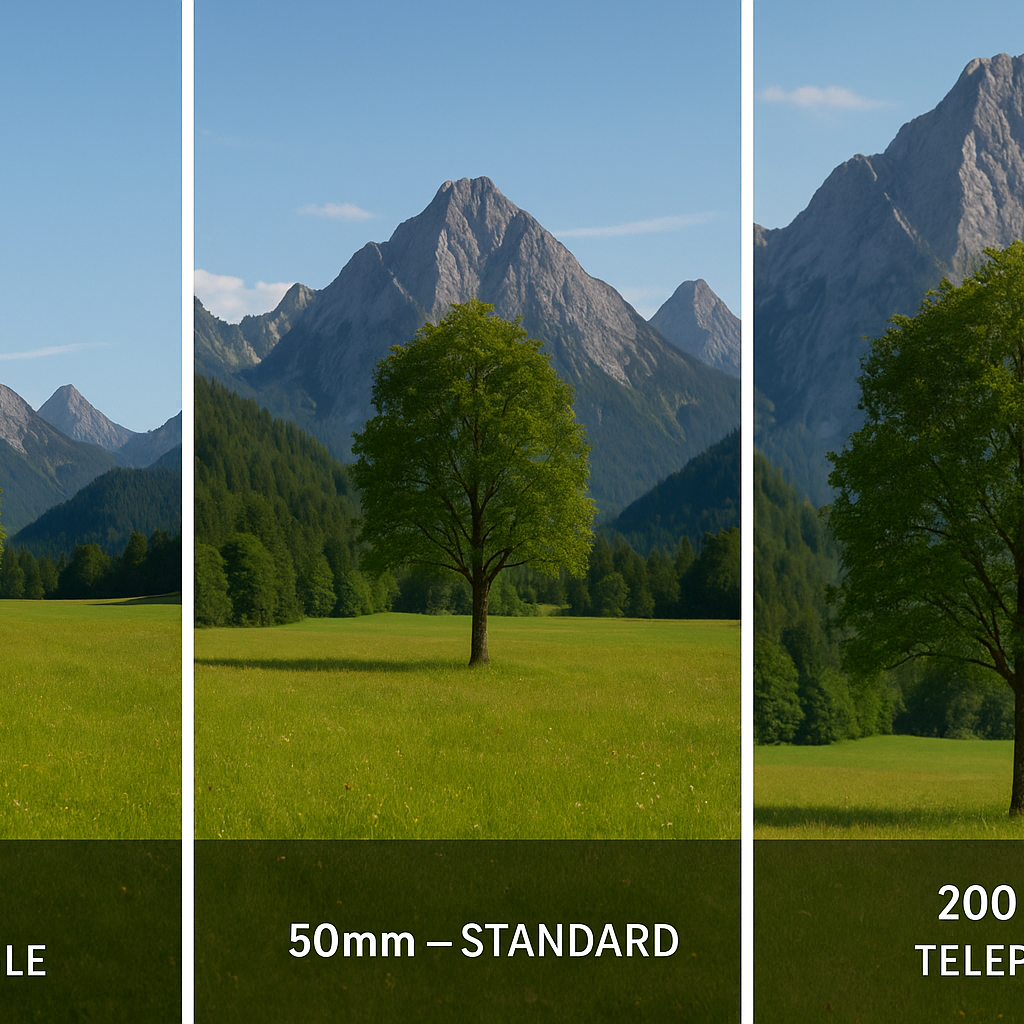
The Ins and Outs of Focal Length: A Photographic Adventure
If you’ve ever stared at a camera lens trying to figure out what “50mm” actually means and whether you need it, you’re not alone. Focal length is one of those photography concepts that sounds intimidating but is actually pretty straightforward once you stop letting the numbers bully you. Think of it as the personality of your lens, some are wide and sociable, others are long and laser-focused. Let’s break it down.
What Even Is Focal Length?
Focal length, measured in millimeters, is the distance from the center of your lens to the camera’s image sensor when your subject is in sharp focus. In practical terms, it determines how much of the scene you capture and how close or far away your subject appears. The shorter the focal length, the wider the view. The longer the focal length, the more you’re zooming in like a hawk spotting a field mouse from 200 feet up.
Lenses generally fall into three camps: wide-angle (14mm–35mm), standard (around 50mm), and telephoto (70mm and beyond). Wide-angle lenses are like that friend who insists on including everyone in the group photo, even the strangers behind you. Standard lenses mimic the natural field of view of the human eye, which is why a 50mm lens is so popular for portraits and everyday shooting. Telephoto lenses, meanwhile, let you zoom in on a subject from across the park without having to awkwardly jog toward them. We’ve all been that photographer. It’s not a good look.
Perspective, Compression, and Why It Matters
Here’s where things get really fun. Focal length doesn’t just determine how much you can see, it actively shapes how your images feel. A longer focal length compresses the background, squishing distant elements closer together and creating that dreamy, flattering effect you see in portrait photography. A shorter focal length does the opposite: it stretches space, makes foregrounds loom large, and can turn a perfectly nice person’s nose into the focal point of the entire image if you get too close. Lesson learned the hard way by many a portrait photographer.
This is why choosing the wrong focal length for a close-up portrait can go south quickly. Shoot someone’s face with a wide-angle lens and suddenly they look like they’re auditioning for a funhouse mirror. Use an 85mm or longer, and you get natural proportions, a beautifully blurred background, and a subject who might actually like the photo. The lens choice isn’t just technical, it’s personal.
Prime vs. Zoom: Choose Your Fighter
Lenses also come in two main varieties: prime lenses (fixed focal length) and zoom lenses (variable focal length). Prime lenses, like the beloved 50mm, are celebrated for their sharpness and image quality. Their one downside? They don’t zoom. At all. Which means you’ll be doing what photographers lovingly call “zooming with your feet”, physically moving closer or farther from your subject. It’s good exercise, honestly.
Zoom lenses, on the other hand, offer a range of focal lengths in one package (think 18–55mm or 70–200mm), making them incredibly versatile for fast-moving subjects or situations where you can’t exactly sprint toward a nesting eagle. The trade-off is that zoom lenses can sacrifice some image sharpness compared to primes, especially at the far ends of their range. Neither option is objectively better, it really depends on what you’re shooting and how much you enjoy cardio.
Depth of Field: The Secret Sauce
Focal length also plays a huge role in depth of field, essentially, how much of your image is in sharp focus versus pleasingly blurry. A longer focal length produces a shallower depth of field, isolating your subject against that gorgeous, soft bokeh background that makes portraits look professional. A shorter focal length keeps more of the scene in focus, which is great for landscapes where you want everything from the wildflowers in front to the mountains behind to be pin-sharp.
This is why a photographer at an outdoor wedding armed only with a wide-angle lens is going to have a rough day. Every unflattering background detail will be in crisp, unforgiving focus right alongside the happy couple. A longer focal length compresses all of that away and lets your subjects shine. Depth of field isn’t just a technical quirk, it’s a storytelling tool.
A Word on Distortion
Every focal length has its quirks, and distortion is one of them. Wide-angle lenses produce what’s called barrel distortion, the edges of your image bow outward, giving a slight convex bulge. This can actually work beautifully for dynamic street scenes or architecture, adding a sense of energy and scale. But point that same lens at someone’s face and you might owe them an apology.
Telephoto lenses produce pincushion distortion, where the edges pull inward slightly. This is generally less of an issue in practice and can even add a sense of depth to your images. The key is knowing what your lens does and leaning into it creatively rather than fighting it.
Matching Focal Length to Your Style
So which focal length should you actually use? It depends entirely on what you’re photographing. Landscape shooters tend to love wide-angle lenses (16–35mm) because they capture sweeping vistas and make viewers feel like they’re standing right inside the scene. Portrait photographers gravitate toward 85–135mm for flattering compression and natural-looking faces. Street photographers often reach for 35–50mm, wide enough to tell a story, tight enough to feel intimate without sticking a camera in someone’s face.
For events, a versatile zoom like a 24–70mm is often the unsung hero. You can grab a wide group shot one moment and zoom in on the cake cutting the next without ever changing lenses or missing the moment. It’s the photography equivalent of a Swiss Army knife.
Final Thoughts
Focal length is one of the most powerful tools in your photographic toolkit, and understanding it opens up a whole new level of creative control. It shapes composition, influences emotion, and determines whether your portraits look flattering or vaguely unsettling. The good news? There’s no perfect focal length, just the right one for the moment you’re trying to capture. So get out there, experiment freely, and maybe give your lenses some fun nicknames while you’re at it. “Charming Charlie” at 85mm and “Streetwise Sammy” at 24mm are already taken, but the rest are up for grabs.
Dive Deeper
📸 Photography 101: Master the basics
⚙️ Gear & Maintenance: Protect your investment
🔭 Beyond the Lens: Find your creative voice
Did you enjoy this post? If you want to keep up with my latest work, get notified when new prints go on sale, or receive more tips like these, consider subscribing to my weekly update. I send out one email every Friday to share what I’m working on and what I’ve learned behind the lens. No spam, just photography.