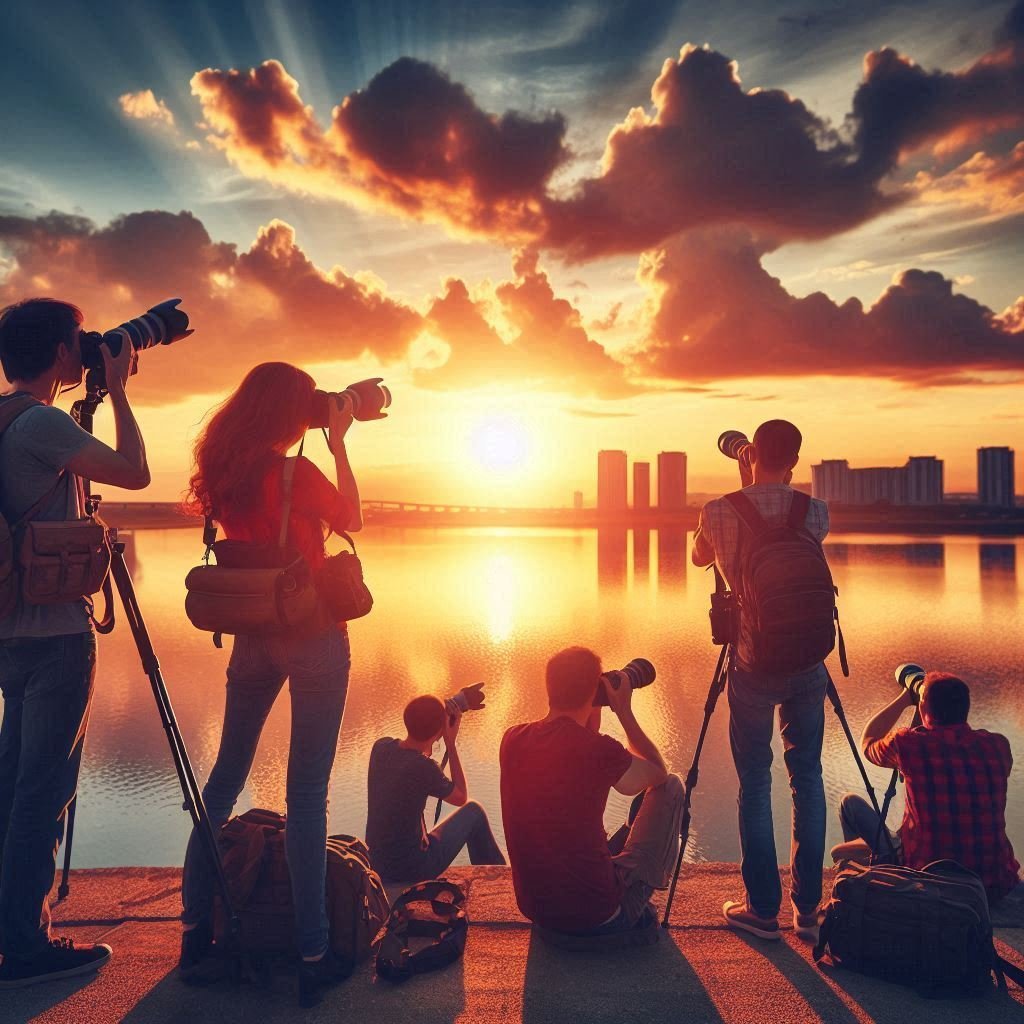
Your Ticket to Greatness (or Just More Opinions About Your White Balance)
So you’ve been out there with your camera, shooting sunsets and pretending your slightly blurry street photos are “intentionally gritty.” You’ve watched approximately 47 YouTube tutorials, have strong opinions about crop sensors, and your hard drive is a graveyard of RAW files you swear you’ll edit someday. What’s the next step in your photographic journey? Perhaps a photography club.
But are they actually worth your time, or are you signing up for a weekly session of someone’s uncle explaining why film is superior? Let’s break it down.
What Even Is a Photography Club?
At its core, a photography club is a group of people, beginners, hobbyists, semi-pros, and the occasional person who just wants an excuse to go outside, who gather regularly to share their work, learn new skills, and talk about cameras for an uncomfortable amount of time.
Meetings typically involve photo critiques, themed challenges, guest speakers, group outings (called “photo walks”), and a surprisingly heated debate about whether Lightroom presets are cheating. Think of it as book club, but instead of novels, everyone brings their best shot of a pigeon.
The Many Flavors of Photography Clubs
Not all clubs are created equal. Here’s a quick tour of what’s out there:
General Photography Clubs are the most common variety. Everyone is welcome, from someone who just unboxed their first DSLR to someone who shoots for regional magazines. Topics range from composition basics to advanced lighting techniques, and the group energy can be wonderfully chaotic or wonderfully inspiring, sometimes both in the same evening.
Genre-Specific Clubs cater to a niche: wildlife photography, portraits, street photography, astrophotography, and yes, even macro photography clubs exist where people spend weekends extremely close to beetles. If you have a specialty, there’s probably a tribe for you.
Online Photography Communities have exploded in popularity. From Facebook groups to Discord servers to dedicated platforms, these virtual clubs let you connect with thousands of photographers worldwide without pants (if you prefer). They’re great for feedback and inspiration, though you do miss the in-person camaraderie. Also, the trolls in these groups can be brutal. You will need thick skin here.
Camera Manufacturer or Local Shop Clubs are often organized around a brand or local store. They tend to be gear-heavy (obviously), but they’re also a great resource for learning your equipment inside and out.
Free vs. Paid Clubs: What’s the Difference?
Many photography clubs are free or charge a small annual membership fee, think twenty to fifty dollars, to cover room rentals, event costs, or a website. These community-run clubs are passion projects, and that grassroots energy can make them incredibly fun and welcoming.
Paid clubs or subscription-based communities (anywhere from $10 to $50+ per month) often offer more structured learning: curated courses, professional critique sessions, access to expert instructors, and members-only content. If you’re serious about leveling up your skills quickly, the investment can absolutely be worth it.
The honest truth? A free club with an engaged, enthusiastic community will beat an expensive one with low energy every single time. Before you commit to anything, try a meeting or trial period. The vibe matters more than the price tag.
Can a Photography Club Actually Help You Grow?
Short answer: Yes. Longer answer: Also yes, but with conditions.
Here’s the thing about photography, it’s easy to fall into a comfort zone. You find your five favorite spots, your two go-to settings, and your one reliable subject (looking at you, person who has 300 photos of their cat). A photography club breaks that loop.
Receiving honest, constructive critique is one of the fastest ways to improve. When someone points out that your horizon is always tilted two degrees to the left, you suddenly can’t unsee it, in your work or anyone else’s. Monthly themed challenges push you to shoot subjects you’d normally avoid, which builds creative flexibility. Watching how other photographers approach a scene, their angles, their timing, their post-processing choices, is like getting a free masterclass every meeting.
For beginners, clubs offer a safe, encouraging environment to ask questions without judgment. For seasoned photographers, they offer fresh perspectives, networking, and the gentle humbling reminder that there’s always more to learn.
The Pros and Cons of Photography Clubs
Every rose has its thorns, and every photography club has that one guy who brings up Ansel Adams in every single conversation.
The Pros are genuinely compelling. You get regular motivation and accountability, knowing you need to submit something for the monthly challenge is a surprisingly powerful antidote to creative procrastination. You build a community of like-minded people who actually want to hear about your new lens. You gain access to collective knowledge: someone in the group has almost certainly solved whatever problem you’re wrestling with. And group outings give you access to locations, permits, and safety in numbers that solo shooting can’t always offer.
The Cons deserve equal airtime. Not every club has a strong culture of constructive feedback, some lean heavily toward praise without substance, which feels nice but doesn’t help you grow. Others can skew toward a specific skill level, leaving beginners overwhelmed or advanced photographers bored. And if the club meets at an inconvenient time or has a long commute attached, the motivation to keep attending can fade fast. Finally, gear snobbery is real. Some clubs, not all, but some, have an undercurrent of “what camera do you shoot with” energy that can feel exclusionary to those without a full-frame setup.
Tips to Make the Most of Your Photography Club Membership
Show up consistently. The value of a club compounds over time. The first few meetings you’re learning names; six months in, you have a creative support system.
Participate actively, not just passively. Submit your work for critique even when you’re not fully happy with it, especially when you’re not fully happy with it. That vulnerability accelerates growth.
Volunteer for challenges outside your comfort zone. If the theme is “architecture” and you only shoot nature, perfect. That discomfort is where the learning lives.
Give feedback as thoughtfully as you receive it. Good critique culture is a two-way street. Learn to articulate what’s working in an image before jumping to what isn’t.
Use the network. Photography clubs are gold for finding shooting partners, second shooters, mentors, or even clients if you’re going pro. Treat every person you meet as a potential collaborator.
And lastly, have fun. Photography is supposed to be joyful. If your club feels like homework, it might be time to find a different one.
Final Thoughts
Photography clubs aren’t magic. They won’t turn a shaky snapshot into a gallery print overnight. But for photographers at every level, the right club offers something that no amount of solo practice or online tutorials can fully replicate: human connection around a shared passion.
Whether you’re a first-week beginner still figuring out aperture, or a twenty-year veteran looking for fresh inspiration, there’s a photography club out there that can challenge you, support you, and occasionally drive you a little bit crazy in the best possible way.
So dust off that camera bag, Google the clubs in your area, and walk through the door. The worst that can happen is you leave with a new appreciation for pigeon photography. And honestly? That’s not the worst outcome.
Now go shoot something.
Dive Deeper
📸 Photography 101: Master the basics
⚙️ Gear & Maintenance: Protect your investment
🔭 Beyond the Lens: Find your creative voice
Did you enjoy this post? If you want to keep up with my latest work, get notified when new prints go on sale, or receive more tips like these, consider subscribing to my weekly update. I send out one email every Friday to share what I’m working on and what I’ve learned behind the lens. No spam, just photography.