Do You Really Need a Tripod? Let’s Settle This Once and for All
Spend enough time around photographers, especially the kind who willingly wake up before sunrise, and you’ll notice a familiar sight. Tripods everywhere. Some look like they’ve survived multiple wars, others are pristine and suspiciously clean, as if they were purchased with great enthusiasm and immediately placed in a closet “for later.”
Which inevitably leads to the question every photographer asks at some point: Do I really need a tripod, or is this just part of the photographer uniform?
And The Answer Is…
The honest answer is this: a tripod has nothing to do with how serious you look and everything to do with how much control you want. Photography is full of variables you can’t manage such as light, weather, wildlife, people, but camera movement doesn’t have to be one of them. A tripod removes that variable entirely, and that alone makes it one of the most quietly powerful tools you can own.
Photography Exclusive?
Tripods didn’t start life as photography accessories. Long before cameras existed, the three-legged design was used because it solved a simple problem: how to keep something stable on uneven ground. Artists figured this out centuries ago, adopting tripods to support canvases and tools because, it turns out, wobble is the enemy of precision no matter what medium you’re working in. When photography arrived in the 19th century, with exposure times long enough to test anyone’s patience, tripods became essential overnight.
Micro Movements
Modern cameras have made handheld shooting easier than ever, which is both a blessing and a curse. It’s tempting to believe stabilization, fast shutter speeds, and high ISOs mean tripods are optional. And sometimes they are. But even the steadiest hands introduce micro-movements that today’s high-resolution sensors are brutally good at revealing. If you’ve ever zoomed in on an image at home and quietly wondered how something that looked sharp in the field suddenly isn’t, congratulations, you’ve already learned why tripods still matter.
What Often Gets Overlooked
What often gets overlooked is how much a tripod changes how you shoot. When the camera is locked in place, you slow down. You stop reacting and start refining. Horizons get straighter. Compositions get cleaner. Distracting elements at the edges of the frame suddenly become obvious. It’s amazing how patient you become when your arms aren’t slowly turning to jelly while you “just grab one more shot.”
A tripod also opens doors creatively. Long exposures, light trails, smooth water, night photography, astrophotography, panoramas, focus stacking, image stacking for noise reduction—all of these become far more reliable when the camera doesn’t move. Even for advanced shooters, the ability to return to the exact same framing repeatedly is something you don’t fully appreciate until you need it.
A Simple Device?
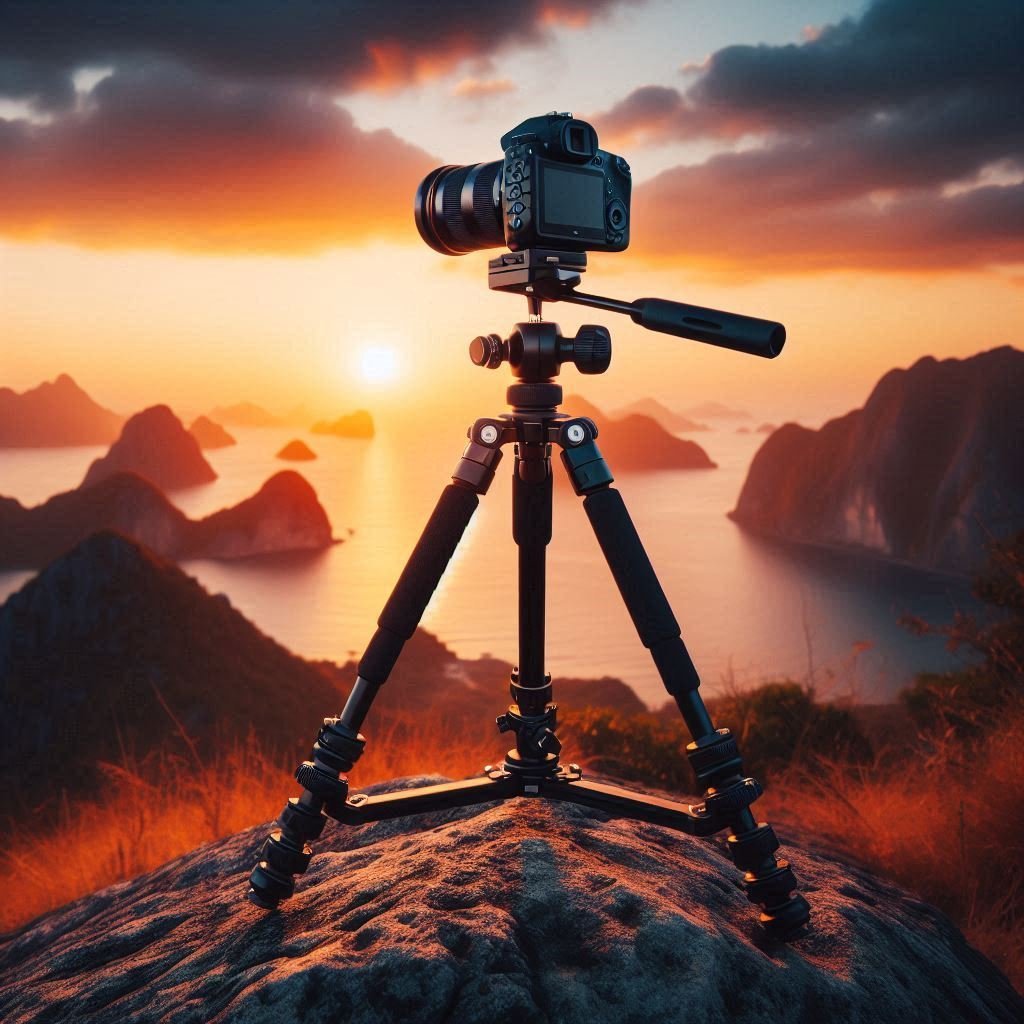
At its core, a tripod is a simple device. Three legs provide stability, a head allows you to position the camera, and a center column fine-tunes height when you’re close but not quite there. Where things get interesting, and sometimes overwhelming, is in the variations of those components.
Tripod Heads
Tripod heads alone can spark endless debates. Ball heads are fast and flexible, which is why they’re so popular for general photography. Pan-tilt heads offer more deliberate control and are favorites for landscapes and architecture. Geared heads take precision to another level entirely, letting you make tiny adjustments that feel more like operating machinery than taking photos. None of these will magically improve your images, but the right one can make your shooting process far more enjoyable.
Tripod Materials
Materials matter more than most people expect. Aluminum tripods are affordable, durable, and a great starting point. Carbon fiber tripods are lighter, dampen vibrations better, and are far kinder to your shoulders on long hikes, which is why many experienced photographers eventually end up with one, often after swearing they never would. For advanced shooters, vibration damping becomes a real consideration, especially when working with longer lenses, high magnification, or multi-second exposures where even mirror slap or shutter shock can show up.
Tripods for Different Types of Photography
Different types of photography ask different things of a tripod. Wildlife photographers often prioritize lightweight setups that can be carried for miles and paired with gimbal heads that make heavy lenses feel almost weightless. Landscape photographers tend to value stability above all else, especially when shooting in wind or uneven terrain, and often appreciate features like spiked feet, low-angle capability, and built-in levels. Sports photographers need smooth movement and quick setup, while portrait photographers benefit from consistency and repeatable framing, especially in controlled environments.
Tradeoffs
Every tripod decision involves trade-offs. Lightweight models are easier to carry but can struggle in gusty conditions. Taller tripods offer flexibility but often sacrifice portability. Extending the center column can be convenient, but it also raises the center of gravity, something advanced shooters learn to avoid unless absolutely necessary. Expensive tripods feel wonderful to use, but affordable ones can still produce excellent results if you understand their limits and work within them.
Final Thoughts
If you’re new to tripods, don’t overthink it. Buy something solid that fits your budget and start using it. You’ll quickly learn what features matter to you, what annoys you in the field, and what you can safely ignore. Your first tripod doesn’t have to be your last, and upgrading later is part of the natural progression.
In the end, the best tripod isn’t the lightest, tallest, or most expensive. It’s the one you actually bring with you. A $1,000 tripod sitting at home does nothing. A slightly imperfect tripod that’s been dragged through dirt, sand, and questionable weather conditions is doing exactly what it was designed to do.
And if nothing else, it saves you from that familiar moment at home when you zoom in on an image and mutter, “I really should have brought the tripod.”
Bring it next time. You’ll thank yourself later.
Dive Deeper
📸 Photography 101: Master the basics
⚙️ Gear & Maintenance: Protect your investment
🔭 Beyond the Lens: Find your creative voice
Did you enjoy this post? If you want to keep up with my latest work, get notified when new prints go on sale, or receive more tips like these, consider subscribing to my weekly update. I send out one email every Friday to share what I’m working on and what I’ve learned behind the lens. No spam, just photography.